Humans have grand plans for residing in space, from a new space station under development to a planned base on the moon. Some even hope that one day people can live on Mars. There’s work underway to figure out how to build habitats to support those ambitions.
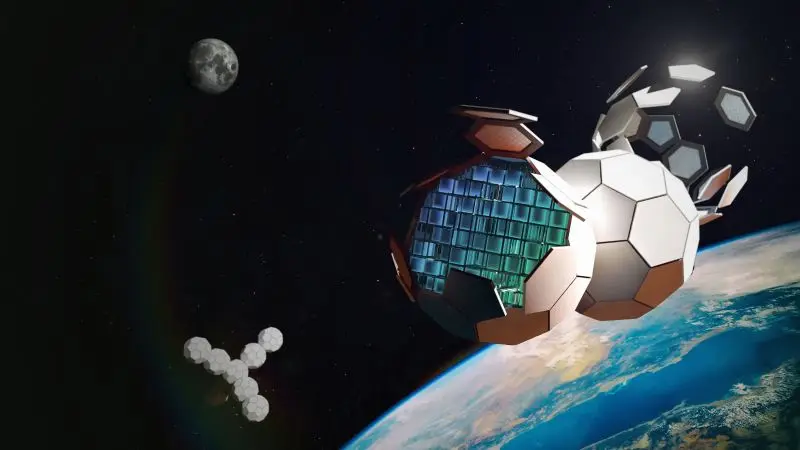
One of the innovations being tested is TESSERAE: magnetic, self-assembling tiles. Invented by Ariel Ekblaw while pursuing her PhD at the Massachusetts Institute of Technology, the tiles can be stacked on top of each other inside a rocket and released in space, where they can autonomously attach to each other — employing electro-permanent magnets, cameras and AI — to create a predetermined shape.