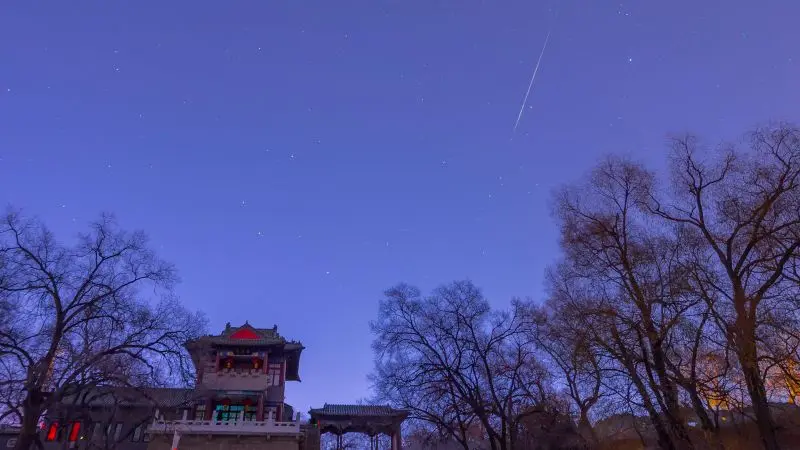
Each November, Earth passes through a trail of debris left behind by comet 55P/Tempel-Tuttle, creating the annual celestial display known as the Leonid meteor shower.
As tiny pieces of the comet fizzle in the atmosphere, they create meteors that can be seen blazing across the night sky.
This year, the shower is expected to peak overnight from Monday through Tuesday, when Earth passes through the densest part of the debris trail, according to the American Meteor Society. Under clear conditions, sky-gazers could see up to 15 meteors per hour, said Bill Cooke, lead of NASA’s Meteoroid Environment Office.